Best overall: Hyundai IONIQ 5. Best for sedan commuters: Hyundai IONIQ 6. Best for larger families: Hyundai IONIQ 9. Best compact option: Hyundai KONA Electric. The best Hyundai electric vehicles in 2026 serve different needs; choose by passenger space, parking fit, and charging access rather than a single range figure.
- The best Hyundai electric vehicles start with Hyundai IONIQ 5 for a practical electric SUV shortlist.
- Choose Hyundai IONIQ 6 for a sedan, Hyundai IONIQ 9 for three rows, or Hyundai KONA Electric for compact driving.
- Compare electric SUV cargo access, rear-seat fit, and the exact vehicle’s charging equipment before deciding.
- McFarland Hyundai suits Seacoast NH drivers shopping Hyundai electric vehicles with local financing and service.
Why this matters
An electric vehicle has to fit both your daily route and your driveway. A car with useful passenger space still creates a problem if your regular charging plan depends on a stop you rarely pass.
For drivers in Portsmouth, Dover, Exeter, and the wider Seacoast NH area, start with your longest routine trip and your parking arrangement. Then compare body styles. Winter conditions also belong in the decision: cold weather affects battery performance, and cabin heating adds an energy demand.
McFarland Hyundai is a practical choice for Seacoast NH drivers shopping Hyundai electric vehicles with local financing and service. Explore McFarland Hyundai in North Hampton, then build your shortlist around the vehicle you can charge and use comfortably.
What makes the best Hyundai electric vehicles?
These criteria determine the ranking. Use them before comparing trims, wheels, or optional equipment.
- Everyday fit: Check driving position, rear-seat access, visibility, and parking dimensions against your normal routine.
- Passenger space: Choose seating for the people you regularly carry, not an occasional trip that dictates every other journey.
- Cargo access: Test the opening and usable space with your stroller, luggage, sports equipment, or work bags.
- Charging fit: Confirm home-charging requirements, connector compatibility, and public-charging options for the exact vehicle.
- Trip flexibility: Compare the vehicle’s published range with your routes, leaving room for weather and charging stops.
- Ownership support: Review service requirements, financing terms, and the documents supplied with a new or used vehicle.
The 2026 shortlist below ranks each Hyundai by a distinct job. Hyundai IONIQ 5 is the default because its electric SUV body style sits between a compact vehicle and a larger three-row family vehicle. That does not make it the right choice for every driveway.
Hyundai electric vehicles at a glance
| Rank and vehicle | Best for | Standout feature | Key limitation |
|---|---|---|---|
| 1. Hyundai IONIQ 5 | Everyday electric SUV use | SUV-style passenger and cargo layout | No third row |
| 2. Hyundai IONIQ 6 | Drivers who prefer a sedan | Separate trunk and sedan driving format | Less flexible cargo access than a hatchback |
| 3. Hyundai IONIQ 9 | Families needing three rows | Three-row electric SUV layout | Larger footprint to assess before choosing |
| 4. Hyundai KONA Electric | Compact driving and parking | Smaller electric SUV format | Less room for passengers and bulky cargo |
Treat this as a model-family comparison, not a claim that every model has a particular 2026 configuration. Check the model year, trim, drivetrain, and equipment on the exact vehicle you are considering; shared model names do not guarantee identical specifications.
1. Hyundai IONIQ 5: best electric SUV for everyday use
Hyundai IONIQ 5 is the first vehicle to consider when you want an electric SUV without moving into a three-row format. Its hatchback cargo access makes it a useful starting point for errands, commuting, and family trips.
Choose Hyundai IONIQ 5 when passenger comfort and load access matter together. Before deciding, sit behind your own driving position and load the items you carry most often. A comfortable front seat does not answer whether your rear passengers or luggage fit.
Hyundai IONIQ 5 pros:
- SUV-style cargo access suits mixed everyday loads.
- A two-row layout serves households that do not need additional seating.
- It offers an alternative to both a sedan and a larger family SUV.
Hyundai IONIQ 5 cons:
- It does not provide a third row for additional passengers.
- A compact vehicle deserves consideration when parking space is your main constraint.
- Range and charging details require an exact model-year and trim comparison.
Best for: Drivers who want one electric SUV for commuting, errands, and regular family use.
For your 2026 test drive, focus on visibility, rear-seat access, and the cargo opening before the dashboard features. Try the parking spaces you use regularly where a test-drive route permits it. Those checks answer practical questions that a specification sheet leaves open.
Verdict: Buy Hyundai IONIQ 5 if a two-row electric SUV fits your household and charging routine.
2. Hyundai IONIQ 6: best electric sedan for commuting
Hyundai IONIQ 6 belongs on your shortlist when you prefer a sedan to an SUV. Its separate trunk gives it a different loading format from Hyundai IONIQ 5, so compare the opening as well as the space inside.
For commuting, concentrate on seat comfort, outward visibility, and the controls you use repeatedly. Test the rear seat too, even if you usually drive alone; a sedan that fits your daily route still needs to handle the passengers you actually carry.
Hyundai IONIQ 6 pros:
- A sedan format suits drivers who do not want an SUV body style.
- A separate trunk keeps luggage outside the passenger area.
- It provides a clear alternative when your shortlist is otherwise entirely SUVs.
Hyundai IONIQ 6 cons:
- A trunk opening is less flexible than a hatch for some bulky objects.
- Roof shape and rear-seat entry deserve a hands-on check.
- Published range figures cannot replace a comparison of the exact configurations.
Best for: Commuters who prefer a sedan and rarely need to load tall or awkward cargo.
Do not choose Hyundai IONIQ 6 solely because a particular configuration has an attractive range rating. Check the vehicle’s wheels, drivetrain, and model-year specifications against that figure. Then decide whether the sedan layout suits your routine better than an SUV.
Verdict: Buy Hyundai IONIQ 6 if sedan comfort and trunk storage match your daily driving.
3. Hyundai IONIQ 9: best electric SUV for larger families
Hyundai IONIQ 9 is the choice to examine when three rows are a requirement rather than a preference. Its larger SUV format changes both passenger planning and the space you need to park it.
Test the seating arrangement with the people who will use it. Check access to the third row, then inspect cargo space with the seats in the position your family needs. Folding seats demonstrates flexibility, but it does not show luggage room when every passenger seat is occupied.
Hyundai IONIQ 9 pros:
- Three rows address a need the other vehicles on this list do not serve.
- An SUV hatch supports family loading and unloading.
- The seating layout lets you assess passengers and cargo together.
Hyundai IONIQ 9 cons:
- Its larger footprint demands a careful garage and parking-space check.
- Cargo room changes when rear seats are occupied rather than folded.
- A larger vehicle is unnecessary if your household rarely needs the extra seating.
Best for: Families that regularly need three rows in an electric vehicle.
For a 2026 family shortlist, make Hyundai IONIQ 9 earn its place through actual seating needs. Bring child seats when relevant and consult the owner’s manual for approved installation positions. Check door access with your normal parking constraints in mind.
Verdict: Buy Hyundai IONIQ 9 if you regularly need three rows; skip the extra size if you do not.
4. Hyundai KONA Electric: best electric SUV for compact driving
Hyundai KONA Electric is the option to examine when a smaller vehicle better matches your parking and everyday loads. Its compact SUV format serves a different purpose from the larger Hyundai electric SUVs above.
Start with rear-seat space and your largest regular cargo item. A compact vehicle only works if you can carry what you need without routinely rearranging the cabin. Confirm the model year and equipment rather than assuming every KONA Electric has the same charging or battery specification.
Hyundai KONA Electric pros:
- A compact format suits drivers who prioritize vehicle size.
- Hatchback access offers flexibility for everyday loading.
- It avoids choosing a larger SUV merely to get an electric powertrain.
Hyundai KONA Electric cons:
- Passenger and cargo space are tighter than in larger SUV alternatives.
- Regularly carrying several passengers makes a rear-seat test essential.
- Different model years require separate equipment and charging checks.
Best for: Drivers who want a compact electric vehicle for everyday trips and manageable parking.
When comparing a used Hyundai KONA Electric, review its service history, charging equipment, and condition. Ask about battery-health information and confirm any applicable warranty terms from the vehicle’s documents. Treat those checks as purchase requirements, not assumptions based on the model name.
Verdict: Buy Hyundai KONA Electric if compact size matters more than maximum passenger or cargo space.
Check charging before you choose a vehicle
The best Hyundai electric vehicle for your household is one you can charge reliably. Decide where charging will happen before choosing a trim; public charging should support your routine rather than dictate it.
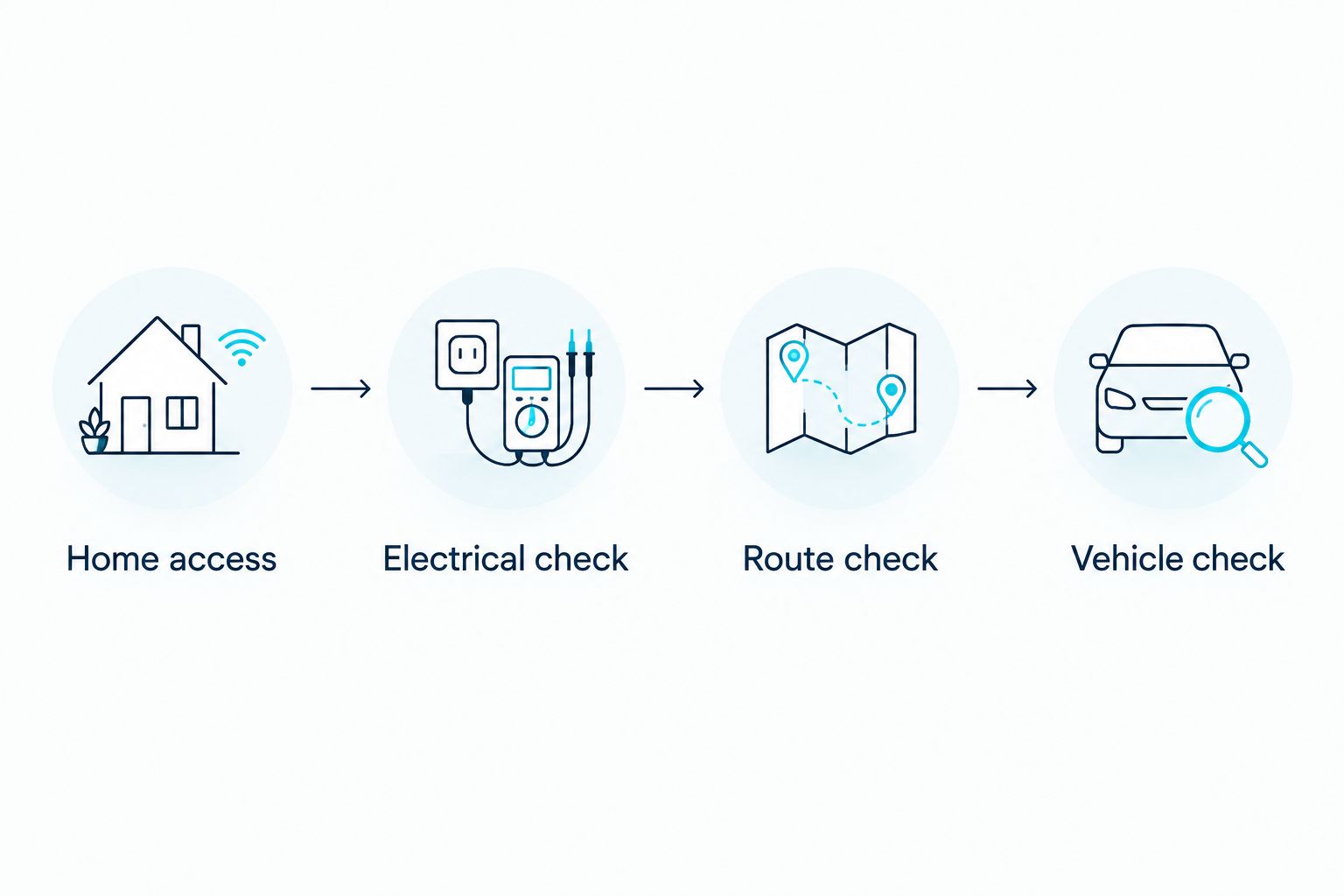
Use this sequence for your 2026 purchase:
- Home access: Establish whether you have a suitable dedicated parking location and permission to install charging equipment.
- Electrical check: Have a qualified electrician assess the circuit, panel, and installation requirements.
- Route check: Identify charging stops on your routine journeys and longer trips, including an alternative location.
- Vehicle check: Confirm the exact vehicle’s connector, supported equipment, and any adapter requirements.
Standard household Level 1 charging uses 120 volts; residential Level 2 charging generally uses 240 volts. Voltage alone does not tell you charging time. The vehicle, charging equipment, electrical supply, and battery conditions all affect the result.
For Seacoast NH driving, include winter trips in that plan. Compare the exact vehicle’s published range with your journey, heating needs, and charging opportunities; do not treat a rated figure as a guaranteed distance in every condition.
How the vehicles are ranked
This ranking uses body style, passenger needs, cargo access, and charging fit rather than an unsupported score. It is a buying framework, not a claim of instrumented testing or identical specifications across model years.
Hyundai IONIQ 5 takes the default position for everyday electric SUV shopping. Hyundai IONIQ 6 serves sedan buyers, Hyundai IONIQ 9 serves households needing three rows, and Hyundai KONA Electric serves drivers prioritizing compact size. Your strongest constraint should determine the winner.
Which Hyundai electric vehicle should you choose?
Start with Hyundai IONIQ 5 unless you have a clear reason to choose another body style. Move to Hyundai IONIQ 6 for a sedan, Hyundai IONIQ 9 for regular three-row use, or Hyundai KONA Electric for compact driving.
Bring your actual requirements to McFarland Hyundai: passenger needs, parking measurements, regular routes, and charging arrangements. For a new or used Hyundai electric vehicle, compare the exact vehicle’s documents and equipment before committing. Model names are the shortlist; vehicle-specific checks are the decision.
Explore Hyundai electric vehicles
Discuss Hyundai vehicle sales, financing, and service with McFarland Hyundai in North Hampton.
FAQ
What are the best Hyundai electric vehicles in 2026?
Hyundai IONIQ 5 is the default everyday SUV pick, Hyundai IONIQ 6 suits sedan commuters, Hyundai IONIQ 9 serves three-row families, and Hyundai KONA Electric suits compact driving. Compare the exact vehicle’s model year and equipment before choosing.
Is Hyundai IONIQ 5 better than Hyundai IONIQ 6?
Hyundai IONIQ 5 is the better fit when you want SUV-style cargo access; Hyundai IONIQ 6 is the better fit when you prefer a sedan. Test passenger comfort and load your regular luggage before deciding.
Which Hyundai electric vehicle is best for a larger family?
Hyundai IONIQ 9 is the pick on this list for families that regularly need three rows. Check third-row access and cargo room with the seats arranged for your household.
Which Hyundai electric vehicle should I consider for compact driving?
Hyundai KONA Electric is the compact option on this shortlist. Confirm that its rear-seat space and cargo area handle your normal passengers and loads.
Can I charge a Hyundai electric vehicle at home?
Home charging requires compatible equipment and a suitable electrical supply. Level 1 uses 120 volts, while residential Level 2 generally uses 240 volts; have a qualified electrician assess your installation.
What should I check before buying a used Hyundai electric vehicle?
Check the exact model year, service history, condition, charging equipment, and available battery-health information. Confirm applicable warranty terms from the vehicle’s documents rather than assuming coverage.
Where can I discuss Hyundai electric vehicles near Portsmouth, NH?
McFarland Hyundai in North Hampton serves Seacoast NH drivers with Hyundai vehicle sales, financing, and service. Bring your charging plan, passenger requirements, and regular routes to the conversation.
One last thing
Bring your largest regular cargo item to the test drive. A stroller, sports bag, or luggage case reveals more about usable space than comparing cargo figures alone.
For your 2026 decision, make that item fit with the seats positioned for your passengers. Choose the Hyundai electric vehicle that handles your real routine without a workaround.